
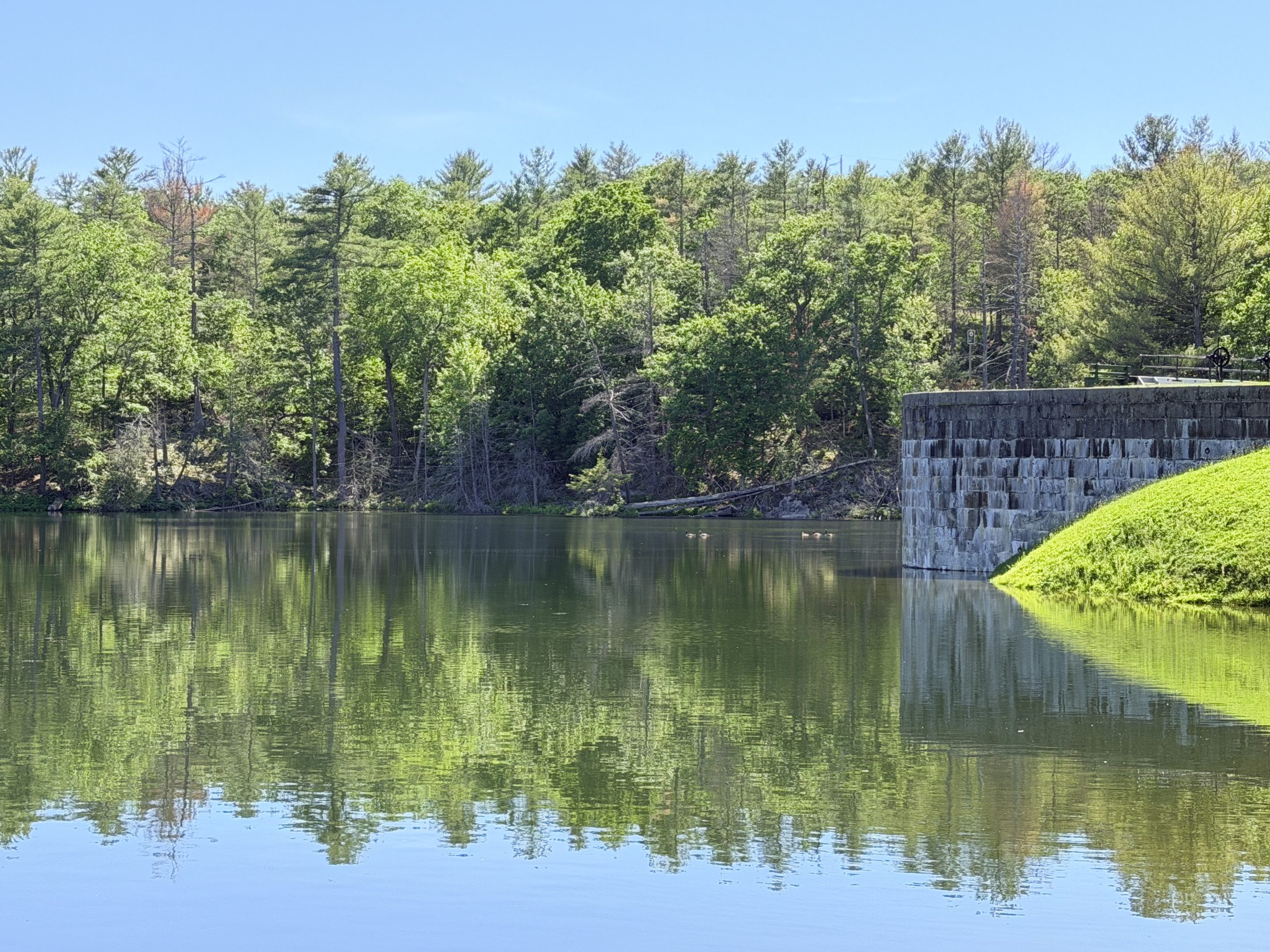
The Rideau Canal Beyond the Locks
The best way to experience the Rideau Canal isn’t simply by passing through its locks. It’s by understanding the stories that shaped the waterway between them.
For nearly two centuries, travellers have arrived at the Rideau Canal expecting a series of locks, boats, and beautiful scenery.
They’re not wrong.
The locks are among Canada’s most remarkable engineering achievements, and watching boats rise and fall through hand-operated chambers remains one of the canal’s defining experiences.
But if the locks are all you see, you’ve only experienced how the Rideau Canal works.
You haven’t yet discovered why it matters.
The real story of the Rideau Canal unfolds between the lockstations, in the villages, landscapes, and decisions that transformed an ambitious military project into one of Canada’s most enduring cultural landscapes.
The Rideau Canal is not simply a waterway.
It is a story about geography, engineering, politics, Indigenous presence, settlement, commerce, and the people whose lives changed because of a decision made nearly two hundred years ago.
Understanding that story changes how you experience every lock that follows.
More Than an Engineering Project
The Rideau Canal was built after the War of 1812 as a secure military supply route between Montréal and Kingston, safely removed from the vulnerable St. Lawrence River.
But building the canal meant far more than digging channels and constructing locks.
Its engineers had to work with rivers that already existed, lakes that changed dramatically with the seasons, granite ridges that resisted excavation, and wetlands that refused to behave as maps suggested.
Every decision altered the landscape.
Water levels rose.
Roads moved.
Villages emerged.
Others disappeared.
Communities adapted to an entirely new relationship with the water.
The canal became not only a transportation corridor but the framework around which much of eastern Ontario would continue to grow.
The Places Between the Locks
Many visitors remember individual lockstations.
Fewer remember the places that explain why those locks exist.
Newboro sits at the summit level of the Rideau Canal, where water begins its journey in opposite directions.
Jones Falls reveals one of the canal’s greatest engineering achievements, where Colonel John By’s remarkable stone dam allowed an entirely new route through the landscape.
Elsewhere, villages developed where trade became possible, mills found reliable power, hotels welcomed passing travellers, and local businesses grew around a waterway that had reshaped both geography and opportunity.
These places were never simply stops along the canal.
They became communities because of it.
A UNESCO Landscape, Not Simply a Canal
When UNESCO recognized the Rideau Canal as a World Heritage Site, the designation acknowledged more than impressive engineering.
It recognized a cultural landscape.
The canal cannot be understood by looking only at the structures built in the 1830s.
Its significance lies equally in the villages that grew beside it, the farms that adapted to changing water levels, the heritage buildings that remain, and the continuing relationship between people and the waterway.
That relationship is still visible today.
Not as a museum.
As a living landscape.
Experiencing the Rideau Canal Differently
Travelling the Rideau Canal becomes richer when curiosity replaces checklists.
Instead of asking how many lockstations you can visit in a day, ask why this particular place exists.
Instead of photographing another beautiful view, ask what changed here.
Instead of seeing a canal built through the landscape, begin noticing a landscape permanently shaped by the canal.
The Rideau Canal rewards travellers who slow down.
Its greatest stories are rarely announced by interpretive signs.
They’re found in conversations with local historians, preserved heritage buildings, overlooked viewpoints, and communities that continue to live alongside one of Canada’s greatest engineering achievements.
Because the Rideau Canal is more than a route through eastern Ontario.
It’s one of the best places in Canada to understand how geography, ambition, and human ingenuity can reshape an entire region.
Experience it for yourself
Reading about the Rideau Canal is one thing.
Standing at the summit level, walking through Newboro, exploring Jones Falls, and understanding how these places fit together is something entirely different.
The Newboro Passage is A 1000 Ways’ private hosted Rideau Canal experience, created for travellers who want to go beyond sightseeing and understand why this remarkable stretch of canal still matters today.